Caregiving rarely announces itself. One day, you are a daughter, son, or spouse. Next, you’re juggling doctor visits, bills, medications, and high-stakes decisions with legal and financial consequences. Without a framework, pressure snowballs into decision fatigue, where everything feels urgent, and nothing feels clear.
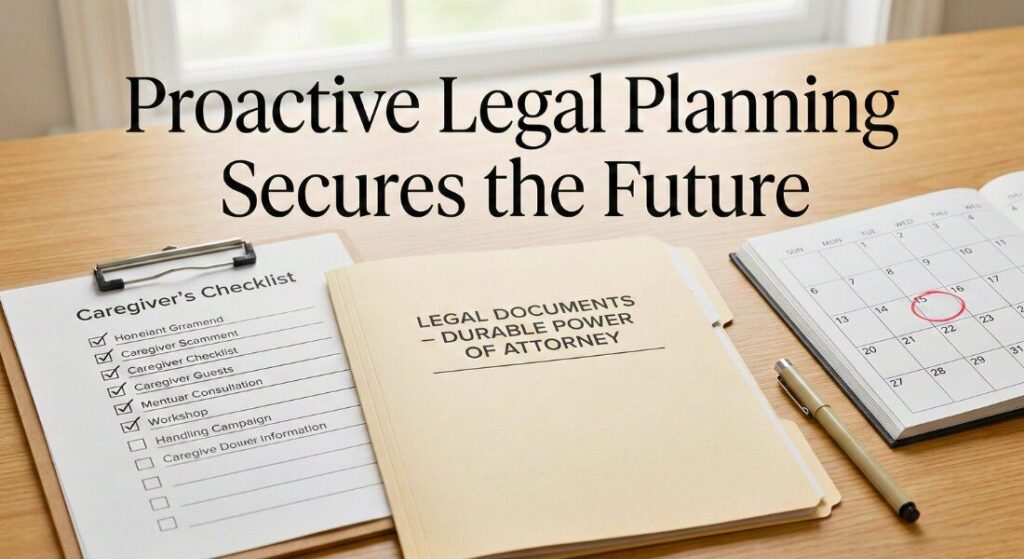
A caregiver planning checklist is not busywork. It’s a protective tool. By clarifying legal authority and financial responsibilities early, you reduce stress, avoid costly mistakes, and make better decisions. A clear checklist helps you regain control, protect your loved one’s interests, and move forward with confidence.
Why Waiting Only Increases Stress
Most caregiver stress does not come from daily care. It comes from uncertainty. When roles, authority, and information remain undefined, small issues escalate fast.
- The Authority Gap: You lack the legal power to sign, access records, or speak for your loved one.
- Financial Bleed: Medical bills and care costs pile up before anyone understands the real financial impact.
- Information Silos: Critical documents are incomplete, and family members argue because facts are missing.
Waiting feels cautious. In reality, it compounds risk and stress.
How a Caregiver Planning Checklist Protects You Legally
Legal stress usually comes down to one thing: authority. Without clear, documented permission to act, routine decisions become legal roadblocks. A checklist closes those gaps before a crisis exposes them.
Clarifying Decision-Making Authority
A checklist forces an early check on who holds power of attorney. Without a valid POA, you may be unable to access accounts, authorize care, or make time-sensitive decisions. In worst-case scenarios, families face court-ordered guardianship that is expensive, slow, and public.
Centralizing Essential Documents
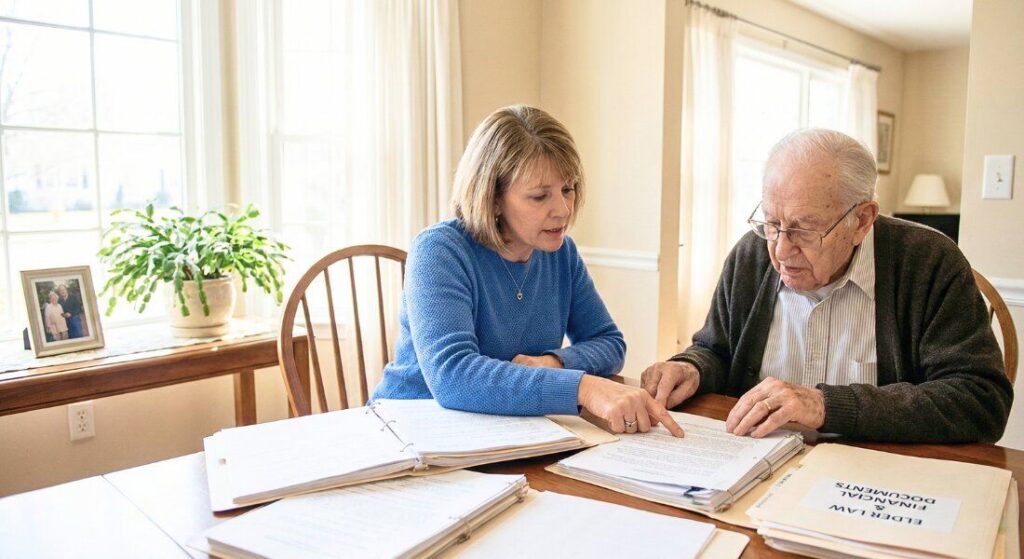
A checklist prevents last-minute document hunts during hospital discharges or emergencies. It establishes a single, known location for critical records, including:
- Advance Healthcare Directives (Living Wills)
- Durable Power of Attorney for Finances
- HIPAA Authorizations
- Wills and Trusts
The goal is simple: fewer legal surprises when decisions cannot wait.
Stay Ahead of Financial Burdens
Financial stress often feels like a slow-motion crisis. Staying organized lets you act proactively rather than constantly react. Track these key areas:
- Income & Assets: Social Security, pensions, VA benefits, and investments. Tracking ensures no money remains on the table.
- Care Expenses: Caregiver stipends, medical supplies, and home modifications. Keeping tabs helps with tax deductions and Medicaid spend-down planning.
- Insurance Policies: Organize long-term care, Medicare Supplement Insurance, and life insurance to prevent missed premiums and use benefits effectively.
Checklist Essentials Every Caregiver Needs
A truly effective checklist organizes critical information into these essential buckets:
- Medical Snapshot: Key diagnoses, current medications and dosages, plus a directory of all attending physicians.
- Financial Roadmap: Bank accounts, automated bills, investments, real estate deeds, and everything needed to manage finances smoothly.
- Legal Vault: Original documents and the contact info for your family attorney, all in one accessible place.
- Secondary Caregiver Plan: A clear backup plan naming who steps in if the primary caregiver becomes unavailable.
3 Common Mistakes to Avoid
Avoid these common pitfalls to keep your checklist effective and stress-free.
- Relying on Memory: Stress clouds recall. Write everything down. Don’t trust your brain to act as a filing cabinet.
- Waiting for a Crisis: Don’t wait for a fall, diagnosis, or emergency to start organizing. The best time to create a checklist was yesterday; the second-best time is today.
- Keeping It Secret: Privacy is important, but secrecy is dangerous. Share the checklist location with at least one trusted family member or professional.
Getting Started Without Overwhelming Yourself
You don’t need to complete the checklist all at once. Try the “One-a-Day” approach:
- Day 1: Locate the power of attorney
- Day 2: List all current medications
- Day 3: Record monthly bills
Update the checklist as your loved one’s health or finances change. Think of it as a living document that grows and adapts with their needs.
FAQs About the Caregiver Planning Checklist
Who should create the caregiver checklist?
The primary caregiver should lead, but collaborate with your loved one and their legal counsel. If multiple family members participate, sharing the checklist avoids the “I thought you had it” problem.
Is a checklist necessary if my loved one is still healthy?
Yes. Organize documents now while your loved one can clearly express their wishes and sign legal documents. Early planning helps avoid court involvement later.
Can a checklist replace legal documents like a will or trust?
No. Think of the checklist as a map and legal documents as the vehicle. It shows where things are and what actions to take, but it has no legal standing. You still need properly executed legal instruments.
How often should I update the checklist?
Follow the “Big Three”: after a hospitalization, a major financial change, or at least once a year. Tax season is a helpful reminder.
Where should I keep the completed checklist?
Keep a digital copy in a secure, shared cloud folder and a physical copy in a fireproof safe or “go-bag.” Make sure at least one trusted person knows the password or the key’s location.
Planning is an Act of Love
Getting organized can feel overwhelming when you’re already caring for a loved one. Scott Law Offices helps families move from stressed and uncertain to confident and prepared.
Schedule a consultation today to protect your loved one’s interests. Gain peace of mind and take the first step toward a clear, manageable plan.