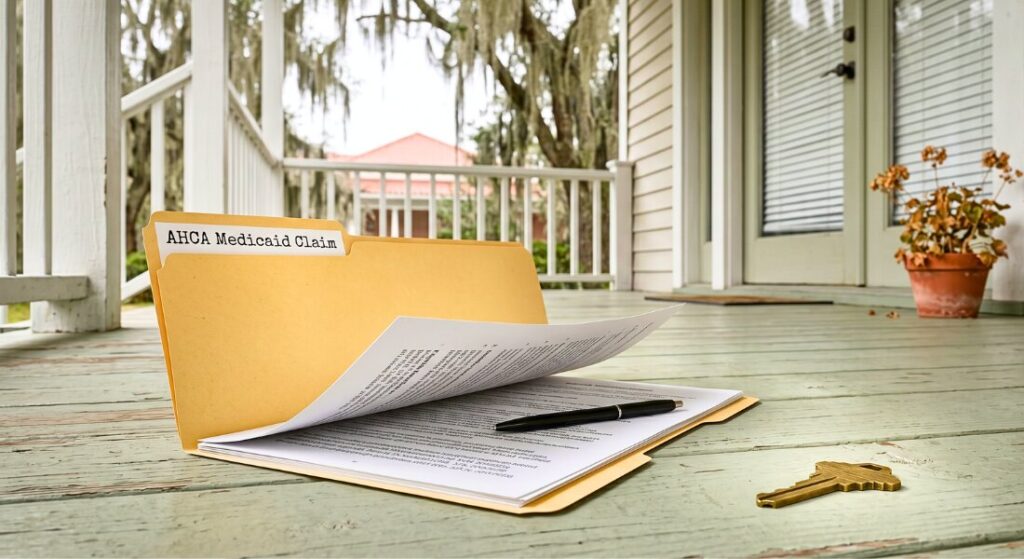
After a parent passes away, most families do not expect the state of Florida to seek repayment for Medicaid benefits. Yet every year, thousands of families receive letters from the Agency for Health Care Administration (AHCA) seeking reimbursement from a deceased loved one’s estate.
This process is known as Medicaid estate recovery. It can place the family home, bank accounts, and other inherited assets at risk. For many families, it comes as an unpleasant surprise at an already difficult time.
Losing a parent is hard enough without learning that an expected inheritance may be reduced or lost. The good news is that Florida’s estate recovery rules include important exemptions. With proper legal planning, families can take meaningful steps to protect their assets.
This guide explains how Medicaid estate recovery works, which assets the state can pursue, and who may qualify for an exemption. We also cover proactive strategies families can use now to help safeguard their parents’ legacy.
Florida Medicaid Eligibility and Cost Updates for 2026
Florida’s Medicaid program continues to evolve, and staying updated is essential for families engaged in long-term care planning. For 2026, the Institutional Care Program (ICP) Medicaid income cap remains tied to 300% of the federal benefit rate. It has increased to $2,982 per month. The asset limit for a single applicant remains $2,000 in countable resources. In contrast, the community spouse resource allowance can now protect up to approximately $162,660 for the spouse living at home. These thresholds are adjusted periodically, so it is important to verify current limits when you begin planning.
Nursing home costs in Florida continue to rise. In many metro areas, a semi-private room now costs more than $9,500 per month. Some facilities in South Florida and the Tampa Bay region cost even more. As care costs increase, Medicaid recipients accumulate higher total benefits over time, leading to larger estate recovery claims after death. Understanding the connection between care costs and estate recovery makes early planning more urgent.
How Florida Medicaid Estate Recovery Works
Under federal law, every state must operate a Medicaid estate recovery program. In Florida, AHCA administers this program. It may seek reimbursement for Medicaid benefits paid on behalf of recipients who were 55 or older.
The state files a claim against the deceased person’s probate estate. It targets assets that pass through probate, such as bank accounts titled solely in the decedent’s name, real estate without survivorship rights, and other individually owned property.
Florida’s program is narrower than in many other states. It applies only to probate assets, not to everything a person owned. Certain assets typically fall outside probate recovery, including:
- Property held in joint tenancy with rights of survivorship
- Accounts with named beneficiaries, such as life insurance or retirement accounts
- Assets placed in certain types of trusts
However, protection is not automatic. If a home is titled solely in the deceased person’s name and no exemption applies, it may still be subject to a claim.
The timing of the claim also matters. AHCA typically files its claim during the probate process, and the personal representative of the estate is legally obligated to notify AHCA of the probate proceeding. If the estate does not go through probate, Florida law limits the state’s ability to recover assets. That is one reason why probate avoidance strategies play such an important role in Medicaid planning.
Key Exemptions To Protect Your Family
Florida law provides several important exemptions that can delay or prevent estate recovery. The most significant is the surviving spouse exemption. If the Medicaid recipient’s spouse is alive at death, the state can’t pursue estate recovery during the surviving spouse’s lifetime.
Additional exemptions apply when the deceased Medicaid recipient is survived by a child under 21. They also apply if the child is blind or permanently disabled as defined by the Social Security Administration. In these cases, estate recovery is deferred or waived entirely.
Florida also allows a hardship waiver. Families may request it if recovery would force a survivor out of their home, remove essential income-producing assets, or create severe financial hardship. These waivers are not automatic, but they can provide important relief in qualifying cases.
Homestead protections under the Florida Constitution may also affect outcomes. In some cases, a surviving spouse or certain heirs may receive the home outside probate, which can limit recovery exposure. However, the interaction between homestead rules, Medicaid liens, and estate recovery is complex. Getting legal guidance for your family’s situation is critical.
Proactive Strategies to Protect Your Parents’ Legacy
The most effective way to reduce estate recovery exposure is to plan before a parent applies for Medicaid. One of the most commonly used strategies is ensuring that assets pass outside probate. It can be accomplished through:
- Beneficiary designations on financial accounts
- Joint ownership with rights of survivorship
- Transfer-on-death designations for bank and investment accounts
- Lady Bird deeds for real property
A Lady Bird deed, or enhanced life estate deed, allows a parent to retain full control of their home during their lifetime. Upon death, the property transfers automatically to a named beneficiary, bypassing probate.
Irrevocable trusts can also help protect assets. However, you must establish them well before applying for Medicaid. Otherwise, you might have issues with the five-year look-back period. Assets placed in an irrevocable trust outside that window are generally not counted for Medicaid eligibility. They also do not pass through probate, which reduces exposure to estate recovery.
Revocable living trusts work differently. They do not shield assets for Medicaid purposes because the grantor keeps control. However, they can still help avoid probate, which may limit estate recovery in some situations.
Every family’s situation is unique. The right approach depends on health, assets, structure, and timing. Working with an attorney experienced in Medicaid planning and estate recovery ensures the strategy holds up when it matters most.
Florida Medicaid Estate Recovery FAQs
Will Florida place a lien on my parents’ home while they are alive and receiving Medicaid?
Florida doesn’t impose liens on a Medicaid recipient’s homestead during their lifetime if they have a reasonable expectation of returning. After death, however, the home may be subject to an estate recovery claim if it passes through probate and no exemption applies.
Can the state recover from assets held in a revocable living trust?
Under current Florida law, estate recovery is limited to the probate estate. Assets in a properly funded revocable living trust pass outside probate and are generally not subject to estate recovery. However, federal law could change this landscape, so ongoing legal review is advisable.
What is the deadline for AHCA to file an estate recovery claim?
AHCA must file its claim within the timeframe established by Florida probate law. Generally, this is three months after the notice to creditors is first published or 30 days after service, whichever is later. If no probate is opened, the state’s ability to recover is significantly restricted.
Can I request a hardship waiver to stop estate recovery?
Yes, Florida allows families to apply for a hardship waiver if estate recovery would cause undue hardship. This waiver applies if a survivor would lose their home or a necessary source of income. Each request is evaluated on a case-by-case basis, and providing thorough documentation strengthens your chances of approval.
Take Action to Protect Your Families’ Assets
Estate recovery is one of those issues that catches families off guard at the worst possible time. The best defense is planning with an attorney who knows the ins and outs of Florida Medicaid law.
Need help managing Medicaid or VA benefits eligibility? Contact Scott Law offices for assistance. Accessible, affordable legal help is available without leaving your home.
You can also share this article with a family member or friend who may be dealing with these same concerns. Sometimes the most helpful thing you can do is pass along the right information at the right time. To learn more about protecting your family’s future, ask about our free resources and online seminars on Medicaid planning and elder law.