When a parent or spouse needs long-term care, families often focus on doctors, facilities, and Medicaid paperwork. While all of these considerations matter, geriatric care managers are often overlooked despite the valuable role they can play.
These specialists do more than coordinate medical appointments. They can play a meaningful role in your Medicaid planning strategy. A geriatric care manager assesses your loved one’s needs and creates a detailed care plan. That assessment can support legal strategies your elder law attorney uses during the Medicaid application process.
Their involvement can also justify caregiver compensation through personal care agreements. This planning tool protects family assets while ensuring quality care. Many Florida families miss this opportunity simply because they do not know it exists.
If you are helping an aging loved one navigate the complexities of Medicaid eligibility, understanding this role could save your family thousands of dollars. It could also bring much-needed peace of mind during an overwhelming time.
Florida Elder Law Update for 2026
Florida Medicaid eligibility limits for 2026 continue to reflect modest adjustments. The individual income cap for Institutional Care Program Medicaid remains tied to 300 percent of the federal benefit rate. For 2026, that figure is approximately $2,901 per month. The community spouse resource allowance has also been updated, now reaching roughly $157,920 in countable assets. Families should verify these figures with a qualified attorney as they plan.
Nursing home costs across Florida continue to climb. The average cost for a semi-private room now exceeds $10,000 per month in many parts of the state. Tampa Bay, South Florida, and Orlando-area facilities have seen some of the steepest increases. These rising costs make proactive Medicaid planning and asset protection more important than ever for Florida families.
The Role of a Geriatric Care Manager
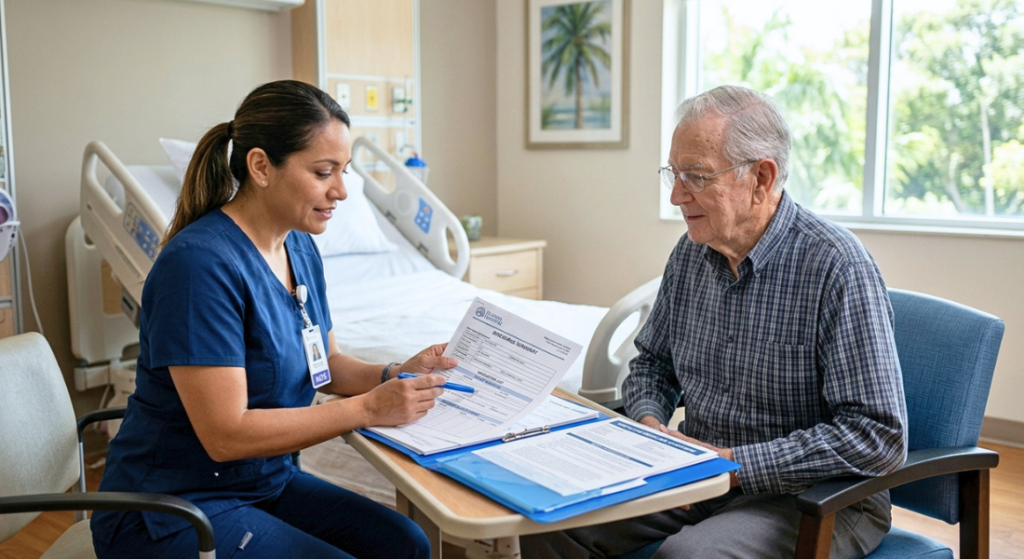
A geriatric care manager is typically a licensed social worker or registered nurse. They specialize in evaluating the needs of older adults. Their job involves assessing physical health, cognitive function, emotional well-being, and living conditions. Using these assessments, they then create a care plan tailored to your loved one’s situation.
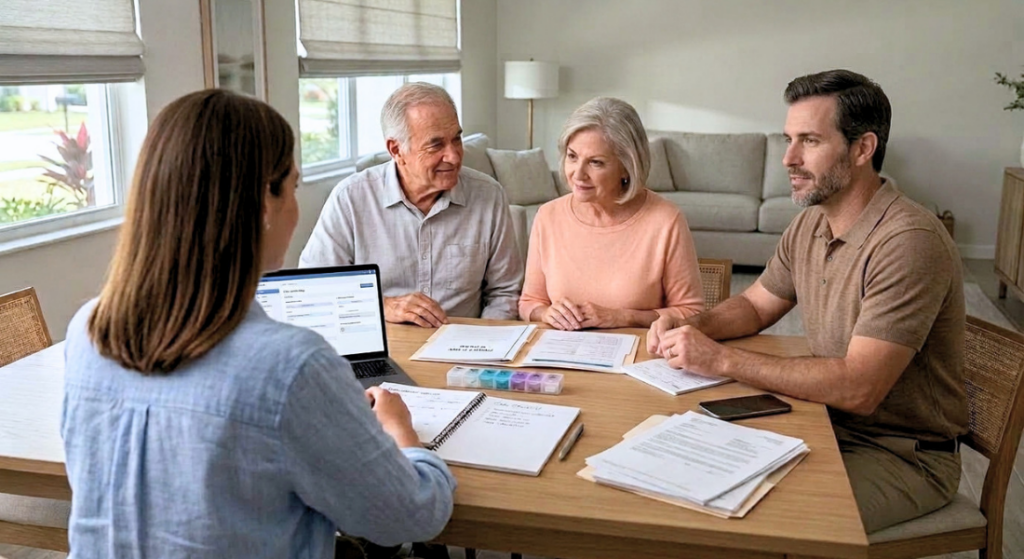
These professionals also coordinate between doctors, home health agencies, and legal or financial advisors. They serve as a central point of contact for families. This is especially helpful when adult children live out of state or when care decisions involve multiple providers. Having one person oversee the full picture reduces confusion and prevents gaps in care.
In Florida, many geriatric care managers are members of the Aging Life Care Association. They follow professional standards and ethics guidelines. Their training allows them to identify risks that family members might miss, such as medication conflicts or unsafe home environments.
How Care Manager Assessments Support Medicaid Planning
A professional assessment from a geriatric care manager creates a documented record of your loved one’s care needs. This documentation can be essential during the Medicaid application process. It provides objective evidence of the level of assistance required for daily living activities.
When families enter into personal care agreements, Medicaid requires reasonable compensation. A geriatric care manager’s assessment helps justify the terms of these agreements. It connects specific care tasks to the individual’s documented needs. Without this type of professional evaluation, Medicaid may question whether the arrangement is legitimate.
Your elder law attorney can use this assessment to strengthen your application. It demonstrates that funds spent on care were necessary, not simply a way to reduce countable assets. This distinction matters greatly when Medicaid reviews your financial history during the look-back period.
Personal Care Agreements and Protecting Family Assets
A personal care agreement is a formal contract between a senior and a caregiver, often a family member. It outlines specific services the caregiver will provide and the compensation they will receive. When properly drafted, these agreements are a legitimate Medicaid planning tool.
The key is that the agreement must be created before services are rendered. Payments must reflect fair market value for the care provided. A geriatric care manager’s assessment supports both requirements. It defines exactly what care is needed and what a reasonable rate would be in your area.
Without a proper agreement, Medicaid may treat payments to family caregivers as gifts. Gifts made during the five-year look-back period can trigger a penalty. That penalty delays Medicaid eligibility, leaving the family responsible for nursing home costs in the meantime. A well-structured personal care agreement, supported by a professional assessment, can help avoid this costly mistake.
Coordinating Medical, Legal, and Financial Decisions
Caring for an aging loved one involves many moving parts. Medical providers, attorneys, financial advisors, and insurance companies all play a role. A geriatric care manager helps bring these pieces together into a coherent plan.
They can attend medical appointments, communicate with your elder law attorney, and monitor care quality. They also help families make informed decisions about when home care is no longer safe.
Transitioning to assisted living or a skilled nursing facility involves both medical and financial considerations. A care manager ensures these decisions align with your overall planning strategy.
For Florida families dealing with a dementia diagnosis, this coordination is especially critical. Cognitive decline creates urgency around legal documents like powers of attorney and health care surrogates. A care manager can identify the right time to act and connect families with the appropriate legal resources.
FAQs About Medicaid Planning and Geriatric Care Managers
How much does a geriatric care manager cost in Florida?
Fees typically range from $150 to $250 per hour depending on the region and the professional’s credentials. An initial assessment may cost between $500 and $1,500. These costs can be well worth it when they support a Medicaid strategy that protects significant family assets.
Does Medicaid pay for geriatric care management services?
Traditional Medicaid does not directly cover geriatric care management fees. However, some Florida Medicaid waiver programs may include care coordination as a covered service. Ask your elder law attorney whether your loved one’s situation qualifies for any applicable waiver benefits.
Can a family member serve as both caregiver and care manager?
A family member can serve as the caregiver under a personal care agreement. However, the care manager who performs the assessment should be an independent, licensed professional. Medicaid expects an objective evaluation to justify the caregiver arrangement.
When is the best time to hire a geriatric care manager?
The best time is before a health crisis occurs. Early involvement allows for proactive planning and stronger Medicaid applications. However, even during a crisis, a care manager’s assessment can still support legal strategies and improve care outcomes.
Take the Next Step to Protect Your Family
Do you need help managing Medicaid or VA benefits eligibility? Contact the Scott Law Offices. We provide accessible, affordable legal help without you leaving your home.
Consider sharing this article with a family member or friend who is caring for an aging loved one. You can also explore our free resources on our website for additional guidance on Medicaid planning, estate protection, and long-term care strategies. Knowledge shared today can prevent costly mistakes tomorrow.