
Discovering that your parent has been scammed is heartbreaking, especially when those lost savings were meant to cover long-term care. Unfortunately, this is a growing problem. The FBI reports that elder fraud costs Americans billions each year, with Florida consistently ranking among the states hardest hit.
The good news is that financial exploitation does not automatically prevent Medicaid eligibility. This guide explains how elder fraud can affect Medicaid and the steps Florida families can take to move forward.
Florida Elder Law Update for 2026
In 2026, Florida Medicaid limits countable assets to $2,000 for a single nursing home applicant. At the same time, nursing home care now costs more than $10,000 per month for a semi-private room in many parts of the state, making Medicaid planning essential for families facing financial losses from fraud.
To better protect older adults, the Florida Department of Elder Affairs has also strengthened partnerships with local law enforcement. Families can report suspected financial exploitation through the Florida Abuse Hotline, helping create an official record that may support both fraud investigations and Medicaid planning.
How Elder Financial Scams Complicate Medicaid Eligibility
When your parent applies for Florida Medicaid, the state reviews the previous five years of financial records to identify any asset transfers. If money was lost to a scam, those transactions may initially raise questions during the eligibility review.
Medicaid penalties generally apply only to voluntary asset transfers, not money stolen through fraud or financial exploitation. With proper documentation, Florida Medicaid may recognize these losses as involuntary rather than disqualifying transfers.
Supporting evidence such as police reports, bank records, fraud complaints, and court documents can help demonstrate that the assets were stolen. While the process can be complex, thorough documentation can help protect your parent’s Medicaid eligibility despite the financial loss.
Documenting the Scam to Protect Medicaid Eligibility
Thorough documentation is your strongest tool in this situation. Remember to:
- File a report with local law enforcement as soon as possible.
- Contact the Florida Abuse Hotline at 1-800-962-2873 to report the exploitation officially.
These reports create an official record that supports both fraud investigations and Medicaid eligibility reviews.
- Gather all financial records showing the fraudulent transactions. Bank statements, credit card records, and wire transfer confirmations all help tell the story.
- If your parent received phishing emails or text messages, save those as well.
The more evidence you compile, the stronger your parent’s Medicaid application will be.
Important: You should also consider filing a complaint with the Florida Attorney General’s office and the Federal Trade Commission. These agencies track elder fraud patterns and may assist with recovery efforts.
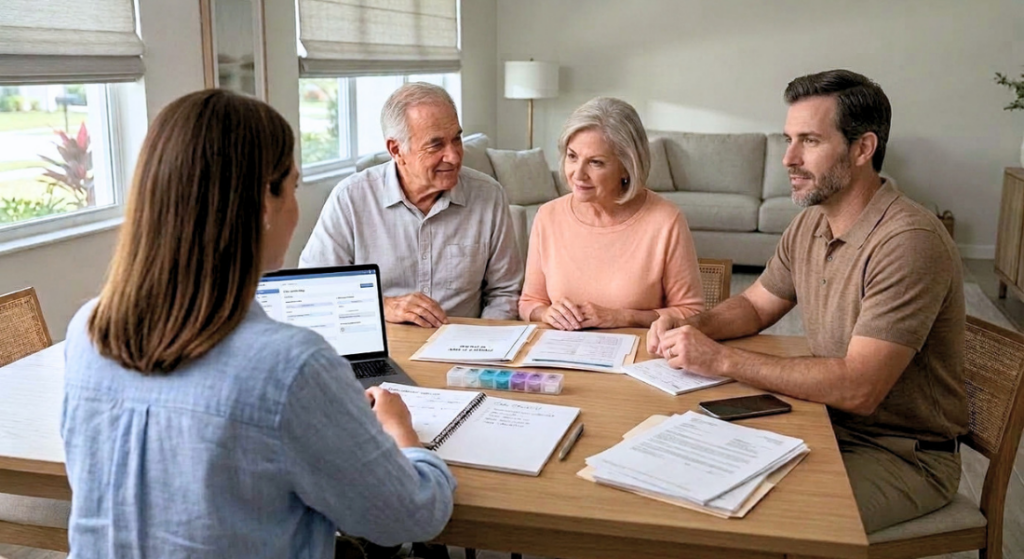
An elder law attorney can organize this evidence and present it clearly during the Medicaid review, helping avoid unnecessary questions or delays.
When to Involve Law Enforcement and Adult Protective Services
Many older adults feel embarrassed after falling victim to a scam, but reporting the fraud is one of the most important steps you can take. A police report not only helps investigate the crime but also provides important evidence that the financial loss resulted from fraud.
File a report with your local law enforcement agency as soon as possible. If the scam involved a caregiver, family member, or another trusted individual, notify Adult Protective Services as well. Acting quickly improves the chances of preserving evidence, recovering stolen assets, and demonstrating that the financial loss resulted from fraud rather than a voluntary transfer.
How an Elder Law Attorney Rebuilds Your Care Plan
After a scam, your family needs more than just a Medicaid application. You need a comprehensive care plan that accounts for the financial damage. An experienced elder law attorney understands how to explain fraud-related financial losses during the Medicaid review process. They can prepare detailed explanations and supporting evidence for the caseworker reviewing your parent’s application.
Your attorney can also explore whether legal planning strategies can protect any remaining assets. For example, if your parent still owns their home, Florida’s homestead exemption may shield it from Medicaid estate recovery. A qualified income trust can address income-cap issues if your parent’s monthly income exceeds the eligibility threshold.
Beyond Medicaid, your attorney can help pursue civil remedies against the scammer. Florida’s Exploitation of Vulnerable Adults statute allows victims to seek damages, including attorney fees. While recovering stolen funds takes time, these legal actions can eventually supplement your parent’s care resources.
Common Questions About Senior Fraud Protection and Medicaid Eligibility
Will stolen money count against my parent’s Medicaid eligibility in Florida?
Not necessarily. If you can document that the funds were lost to fraud rather than voluntarily transferred, Florida Medicaid may exclude them. Police reports, bank records, and attorney documentation all help support this claim during the application process.
How quickly should we report the scam to help with Medicaid planning?
Report the scam immediately. Quick action preserves evidence and creates official records that Medicaid caseworkers will need. Delays can make it harder to prove the loss was involuntary, which may jeopardize your parent’s eligibility.
Can we still apply for Medicaid while a fraud investigation is ongoing?
Yes, you can apply for Medicaid while the investigation continues. Provide all available documentation with the application. Your elder law attorney can communicate with the Medicaid office about the pending investigation to prevent unnecessary denials.
What if the scammer was a family member? Does that change anything for Medicaid?
Exploitation by a family member is still considered involuntary loss if properly documented. You will need police reports and potentially involvement from Adult Protective Services. Florida law treats financial exploitation by trusted individuals very seriously, and Medicaid can still account for those losses.
Get Help Rebuilding Your Parent’s Care Plan Today
Discovering that a parent has been scammed while facing long-term care decisions can feel overwhelming, but you do not have to handle it alone. With the right legal guidance, it is possible to move forward with confidence and secure the care your loved one needs.
If you need help with Medicaid or VA benefits eligibility, contact the Scott Law Offices for accessible, affordable legal assistance without leaving your home.
For more tips on preventing financial exploitation, read our guide to senior fraud protection. If you know someone facing a similar situation, consider sharing this post with them.